Retatrutide side effects: trial data vs what people report online

The short answer
In Lilly's trials, retatrutide's most common side effects were nausea, diarrhea, constipation and vomiting, rising with dose, plus an unusual skin-sensitivity effect called dysesthesia and a heart-rate rise. Hair loss has not appeared among the common events reported so far; fatigue was recorded in the phase 2 trial (3% to 12% across retatrutide groups versus 4% on placebo). Both appear on the Wegovy and Zepbound labels.
Retatrutide side effects are one of the most searched corners of the weight-loss internet, and two very different kinds of information get mixed together there. One is what Eli Lilly’s controlled trials actually recorded. The other is the questions and reports from people using products sold online: whether it makes hair fall out, whether it causes tiredness, why skin can start to feel strange. Both are worth hearing. This page keeps them apart, so you can tell which claims rest on randomized trial data, which rest on a drug label for a related medicine, and which are, for now, anecdote.
What is retatrutide, briefly?
Retatrutide (research code LY3437943) is an investigational once-weekly injection from Eli Lilly that activates three hormone receptors: GIP, GLP-1 and glucagon (Jastreboff et al., NEJM, 2023). Semaglutide (Wegovy, Ozempic) activates one of those, and tirzepatide (Zepbound, Mounjaro) activates two. People are interested in it because of the size of its trial weight loss (an average of 28.3% at 80 weeks on the 12 mg dose in TRIUMPH-1, Lilly, May 21, 2026); the full overview, including the efficacy numbers, is on The Treatment Report’s retatrutide page.
Evidence level for everything below: large randomized, placebo-controlled human trials, which is strong evidence, with one caveat. The phase 2 trial and TRIUMPH-1 have been published in full in a peer-reviewed journal (Jastreboff et al., NEJM, September 29, 2026), but the phase 3 side-effect percentages on this page come from Lilly’s topline announcements, and Lilly says detailed results for the other phase 3 trials will be published later (Lilly, July 23, 2026).
What are the most common side effects of retatrutide?
The most common retatrutide side effects in the trials were gastrointestinal: nausea, diarrhea, constipation and vomiting, and they became more frequent at higher doses. In TRIUMPH-1, the largest phase 3 trial so far (2,339 adults with obesity or overweight, no diabetes, 80 weeks), Lilly reported these rates for the 4 mg, 9 mg and 12 mg doses against placebo (Lilly, May 21, 2026):
| Side effect (TRIUMPH-1) | 4 mg | 9 mg | 12 mg | Placebo |
|---|---|---|---|---|
| Nausea | 28.6% | 38.4% | 42.4% | 14.8% |
| Diarrhea | 25.2% | 34.1% | 32.0% | 13.5% |
| Constipation | 23.8% | 25.9% | 26.1% | 10.9% |
| Vomiting | 10.6% | 22.8% | 25.3% | 4.8% |
| Upper respiratory tract infection | 14.2% | 12.2% | 13.1% | 11.6% |
| Dysesthesia (skin sensation) | 5.1% | 12.3% | 12.5% | 0.9% |
| Urinary tract infection | 7.5% | 8.8% | 8.4% | 5.3% |
| Stopped because of side effects | 4.1% | 6.9% | 11.3% | 4.9% |
Two patterns stand out. First, dose matters a lot: vomiting on 12 mg was more than double the rate on 4 mg. Second, the 4 mg group stopped treatment for side effects at a rate close to placebo. Lilly describes the types of events as “generally consistent” with other incretin drugs, which is the same family as Wegovy and Zepbound.
The other phase 3 readouts tell a similar story with some differences by population. In TRIUMPH-2, in people with type 2 diabetes, diarrhea was the most common event (up to 33.6% versus 13.2% on placebo), and in TRIUMPH-3, in people with severe obesity and heart disease, diarrhea and nausea led the list (Lilly, July 23, 2026). In TRIUMPH-4, in people with knee osteoarthritis, decreased appetite was reported by 18.2% on 12 mg versus 9.4% on placebo (Lilly, December 11, 2025).
The phase 2 trial adds detail on timing: stomach side effects happened mainly while the dose was being stepped up, were mostly mild to moderate, and were partly reduced by starting at 2 mg rather than 4 mg (Jastreboff et al., NEJM, 2023). For how this compares with the approved GLP-1 medicines and how people handle the gut effects day to day, see our guide to GLP-1 side effects and how to manage them.
What is retatrutide dysesthesia, the “skin feels weird” effect?
Dysesthesia is an abnormal or unpleasant skin sensation, such as tingling, burning or skin that feels sensitive to touch, and it is the side effect most specific to retatrutide. In TRIUMPH-1 it was reported by 5.1% to 12.5% of people on retatrutide against 0.9% on placebo, and in TRIUMPH-4 by 20.9% on 12 mg against 0.7% (Lilly, May 21, 2026; Lilly, December 11, 2025). Lilly says the events were generally mild to moderate, mostly resolved during treatment, and rarely led people to stop.
The phase 2 paper reported cutaneous hyperesthesia and skin-sensitivity events in 7% of retatrutide users against 1% on placebo; none were severe, none came with visible skin findings, and the authors wrote that they did not appear related to how much or how fast people lost weight (Jastreboff et al., NEJM, 2023). For scale, the Zepbound label lists dysesthesia at 0.2% to 0.4% against 0.1% on placebo (Zepbound label, DailyMed). This is also the side effect that shows up in first-person reporting: a retatrutide user interviewed by The Guardian described his skin becoming extra sensitive (The Guardian, August 31, 2026).
Does retatrutide raise your heart rate?
Yes, in the trials it did. The phase 2 trial found heart rate rose with dose, peaked at 24 weeks and then declined; the authors noted that glucagon and GLP-1 can both speed the heart and that the increases were similar to those reported for GLP-1 drugs (Jastreboff et al., NEJM, 2023). For comparison, the Wegovy label reports mean resting increases of 1 to 4 beats per minute and the Zepbound label 1 to 3 (Wegovy label, DailyMed; Zepbound label, DailyMed).
A newer, weaker source points the same way. A preprint analysis of health records, not yet peer-reviewed and observational, found heart rate up about 4.3 beats per minute at 3 months in retatrutide trial participants and about 2.5 in people using retatrutide bought outside trials, a rise it did not see in matched semaglutide or tirzepatide users (Medscape, August 26, 2026). The same analysis reported more new cardiovascular and neuropsychiatric symptoms in the pooled retatrutide group than in the comparison groups, with short follow-up and no way to prove cause.
Does retatrutide cause hair loss?
There is no trial evidence yet that retatrutide causes hair loss more than placebo, but the question is reasonable, and the honest answer is “not shown, not ruled out.” Hair loss does not appear among the common side effects in Lilly’s announcements for any of its four phase 3 trials, and it is not in the phase 2 paper’s table of events reported by at least 5% of participants (Lilly, May 21, 2026; Jastreboff et al., NEJM, 2023). The full TRIUMPH-1 paper is now out, but this page relies on Lilly’s announcement rather than that paper’s complete adverse-event tables, and the other phase 3 papers are still to come, so less common events may not be visible here yet.
What we do know comes from the related approved drugs. The Zepbound label lists hair loss in 4% to 5% of people against 1% on placebo, and the Wegovy label 3.3% against 1%. Both labels say hair loss was associated with weight reduction and was reported more often in women: 7.1% of women versus 0.5% of men on Zepbound (Zepbound label, DailyMed; Wegovy label, DailyMed).
A 2025 scoping review of nine studies on GLP-1 drugs and hair loss noted more than 1,000 spontaneous reports in the FDA’s adverse event database, noted that most studies lacked a dermatologist’s diagnosis, and found that the one study describing the pattern identified telogen effluvium (a shedding phase) and androgenetic alopecia as the most frequent types (Rojas Lopez et al., Cureus, 2025). The authors say a causal link cannot be confirmed. Read together: the labels tie hair loss to weight reduction, and retatrutide produces more weight reduction than either approved drug in its trials, so it would not be surprising if shedding turns up in the full data. That is an inference, not a finding.
Does retatrutide make you tired?
Fatigue was recorded in the phase 2 trial, where it was among the adverse events reported by at least 5% of participants overall: 3% to 12% across the retatrutide dose groups against 4% on placebo, with no steady rise by dose (Jastreboff et al., NEJM, 2023). Those groups were small (33 to 69 people each), and none of Lilly’s phase 3 announcements list fatigue among the most common events. So the trial evidence says tiredness happens, but not yet how much more often than placebo in large trials.
The approved drugs again give a sense of scale. The Wegovy label reports fatigue (grouped with weakness) in 11% of people against 5% on placebo, and the Zepbound label 5% to 7% against 3% (Wegovy label, DailyMed; Zepbound label, DailyMed). Online, people often connect tiredness with eating much less, and the trials do show reduced appetite on retatrutide, but no trial has measured whether that is the cause. Keeping protein and training up during fast weight loss is a related concern, covered in our guide to GLP-1 muscle loss and how to prevent it.
Is retatrutide safe?
Nobody can call retatrutide safe or unsafe yet, because the full safety picture is still being assembled. What the trials show is a side-effect profile that looks like the GLP-1 family, with more stomach effects at higher doses, plus two signals of its own: dysesthesia and a heart-rate rise. In TRIUMPH-3, in people with established heart disease, retatrutide did not show a clear reduction in major cardiovascular events: events were fewer than expected in both groups, and the hazard ratios (0.82 for the broader measure, 1.12 for the narrower one) had confidence intervals crossing 1 (Lilly, July 23, 2026). PeptideAgent’s retatrutide profile follows its trial results and regulatory status as new data arrive; as of its September 2026 check, the drug was not approved anywhere.
Two more points matter for anyone reading this outside a trial. The trial results describe Lilly’s drug, given on a supervised step-up schedule. Products sold online under the name are not Lilly’s trial drug, and the preprint covered by Medscape found people using them lost about 7.2% of their weight at 6 to 12 months against 15.5% for trial participants in the same records (Medscape, August 26, 2026). Compounds with far less data have the opposite problem: a short side-effect list because almost nothing has been measured in people, as our guide to 5-Amino-1MQ side effects and evidence shows. For how retatrutide’s side effects sit next to other peptides, see peptide side effects and what the evidence shows.
How do retatrutide side effects compare with Wegovy and Zepbound?
The figures below come from separate trials with different people, doses and lengths, so they show the shape of each drug’s profile rather than a head-to-head result. No trial has compared retatrutide directly with semaglutide or tirzepatide.
| Side effect | Retatrutide (TRIUMPH-1, 4 to 12 mg) | Zepbound (label, 5 to 15 mg) | Wegovy (label, 2.4 mg) |
|---|---|---|---|
| Nausea | 28.6% to 42.4% (placebo 14.8%) | 25% to 29% (placebo 8%) | 44% (placebo 16%) |
| Vomiting | 10.6% to 25.3% (placebo 4.8%) | 8% to 13% (placebo 2%) | 24% (placebo 6%) |
| Dysesthesia | 5.1% to 12.5% (placebo 0.9%) | 0.2% to 0.4% (placebo 0.1%) | 2% (placebo 1%) |
| Hair loss | Not among common events reported so far | 4% to 5% (placebo 1%) | 3% (placebo 1%) |
| Fatigue | 3% to 12% in phase 2 (placebo 4%); not among common phase 3 events so far | 5% to 7% (placebo 3%) | 11% (placebo 5%) |
| Heart rate | Dose-dependent rise, peaking at 24 weeks (phase 2) | Mean rise of 1 to 3 beats/min | Mean rise of 1 to 4 beats/min |
Sources: Lilly, May 21, 2026; Jastreboff et al., NEJM, 2023; Zepbound label and Wegovy label on DailyMed. For the two approved drugs side by side, see semaglutide vs tirzepatide.
What the community is saying
We do not have our own community-tracker data for retatrutide yet, so this section summarizes published reporting rather than quoting posts. The Guardian reported that a Reddit community devoted to the drug gets more than 179,000 visits a week and hosts a beginner’s guide to getting it outside trials, and it quoted concerns that people buying outside trials cannot know how much drug a product contains or how pure it is (The Guardian, August 31, 2026).
Here is how four common claims about retatrutide side effects line up with the evidence:
- Claim: retatrutide can make skin feel strange. Supported. Dysesthesia is the clearest retatrutide-specific signal in the trials, and it matches the first-person account in The Guardian.
- Claim: retatrutide makes your hair fall out. Not shown in retatrutide data published so far. Hair loss with weight loss is on the labels of Wegovy and Zepbound, more often in women, so shedding during rapid weight loss is plausible; a retatrutide-specific rate is not known yet.
- Claim: retatrutide makes you tired. Partly supported. Fatigue appeared in phase 2 (3% to 12% across dose groups against 4% on placebo, in small groups), and it is a labeled side effect of the related drugs, but the large phase 3 trials have not reported it among the most common events.
- Claim: retatrutide bought online works like the trial drug. Not supported so far. A real-world analysis, a preprint, found about half the trial-level weight loss with the heart-rate rise still present (Medscape, August 26, 2026).
A side effect reported online can come from the drug, from the weight loss, from a product that is not what its label says, or from something unrelated, and a forum thread cannot tell these apart. That is the main reason to weight trial data more heavily when the two disagree.
What does retatrutide cost?
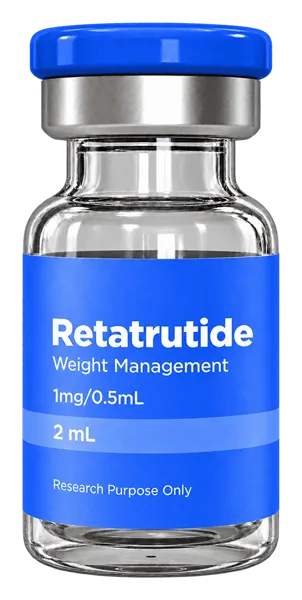
There is no official price, because retatrutide is not approved. The storefront this site links to in its “Where it’s sold” card listed retatrutide at $172 for one month, or $127 a month on a three-month plan, when checked on October 12, 2026, and describes its vials as retatrutide with vitamin B12, a combination Lilly’s trials did not test. Our retatrutide cost explainer covers why listing prices vary. For what happens to weight and appetite after any of these medicines is stopped, see what happens when you stop a GLP-1.
Status: Investigational; not FDA-approved. Lilly plans to submit it for approval in Q1 2027. What this status means.
Educational information only, not medical advice. Trial figures are as reported in the cited publications and company releases as of October 12, 2026. Doses are reported as the trials used them, not as guidance.
Sources (11)
Advertising disclosure: links marked "Paid link" go to Bodybuilding Peptides (trybbpeptides.com), an affiliate destination, and Modern Weight Medicine may earn a commission if you buy there. Our coverage is independent of that relationship, and nothing on this page is medical or legal advice.
 See it at Bodybuilding Peptides